How MuniTrac Unlocks Searchable Data for Local Reporters
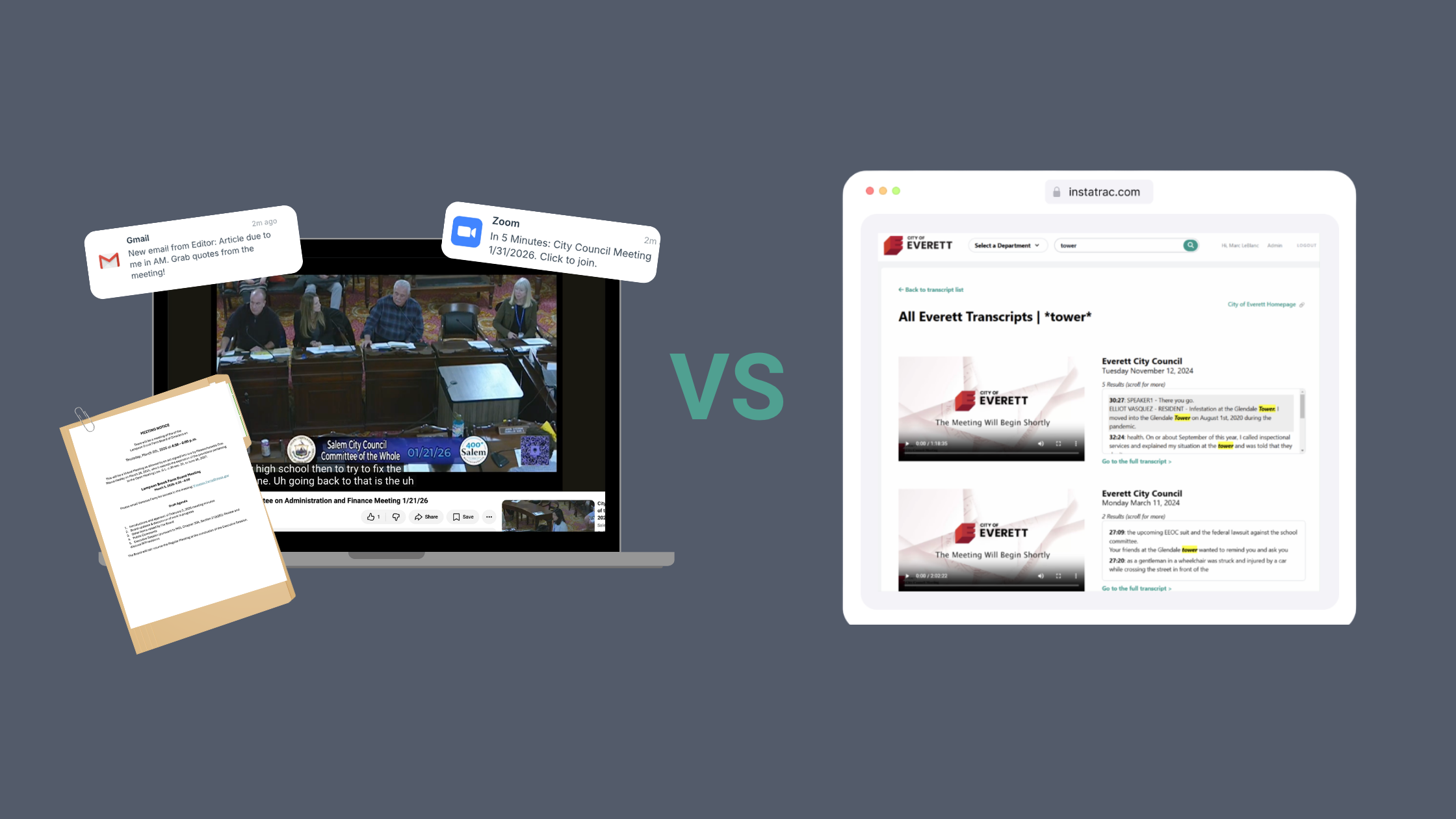
Local government reporters work across crowded agendas, long recordings and documents scattered across municipal websites. The public record may exist, but that does not always make it easy to use.
MuniTrac changes that. When a municipality uses MuniTrac to manage its public meetings, it creates a more organized and searchable record for everyone who follows local government, including the journalists responsible for explaining it.
The reporting cost of public meetings
Covering a meeting often begins with a basic question: Where is the information? An agenda may appear in one place, a packet in another and a video somewhere else. Minutes may not be available until a later meeting. Even after a reporter finds the right recording, locating one comment can mean scrubbing through hours of video.
That work certainly matters, but the mechanics consume time that could be spent calling sources, checking claims or adding context. On a busy local beat, the difference between searchable information and a stack of disconnected files can determine how quickly a reporter understands what happened.
One organized, searchable meeting record
MuniTrac brings meeting materials together and turns recordings into searchable transcripts. Reporters can search for a name, department, project or issue and move directly to the relevant section of a meeting instead of starting at the beginning. That makes it easier to verify wording, trace a discussion and return to the original source.
MuniTrac can also produce draft meeting minutes from the meeting record. Our humans still review the work and local boards still follow their approval process. The technology handles the first pass, helping communities publish complete records without asking staff to reconstruct every discussion from scratch. InstaTrac’s suite of services helps communities stay informed and reporting even stronger.
What reporters can do with searchable municipal data
• Find the quote faster: search a transcript by keyword or speaker and move to the relevant exchange.
• Verify the record: check the exact language and surrounding context before publishing.
• Follow an issue over time: return to organized meeting materials as a proposal moves from one public discussion to the next.
• Catch the follow-up: identify promised reports, delayed votes and questions that officials said they would revisit.
• Spend more time reporting: reduce the hours lost locating files and scrubbing through recordings.
Better access strengthens local accountability
This use case starts with the municipality. A city or town that contracts with MuniTrac is not only improving an internal workflow, but is making public information more usable for local newsrooms.
Municipal transparency is most valuable when people can actually navigate it. By making meeting information easier to search, review and understand, MuniTrac helps communities build a public record that works harder for everyone.
Learn more about MuniTrac to give local reporters better access to your public meetings.